

Daikon soup with pork ribs is a common dish in Thai households. It's very comforting, nourishing, and always takes me back to my mother's home cooking. The ingredients are very simple and takes just about 15 minutes to prep. Once you let everything simmer, you'll have this light soup with tender daikon radish and ribs falling off the bones in no time!

Why We Love This Soup
Whether you're fighting a cold or looking for an easy midweek dinner, this Daikon Radish Soup or ต้มจืดหัวไชเท้า (tom jued hua chai tao) is the perfect dish for you. It's delicious, healthy, and really easy to make. You basically just need to throw every ingredient into the pot.
Although peppery in itself, daikon adds sweetness to whatever soup it's in. And together with spare ribs, they make the ultimate Asian style broth.
You can enjoy this soup just on its own. But if you want to do it the Thai way, then have it with steamed rice and top it with these crispy fried shallots to elevate it. Sometimes, I pour the soup over rice and that there is one great rice soup for me!
If you're looking to pair this daikon soup with another Thai dish, try my Thai omelette or even kua gling for something bolder and hot.
Ingredients
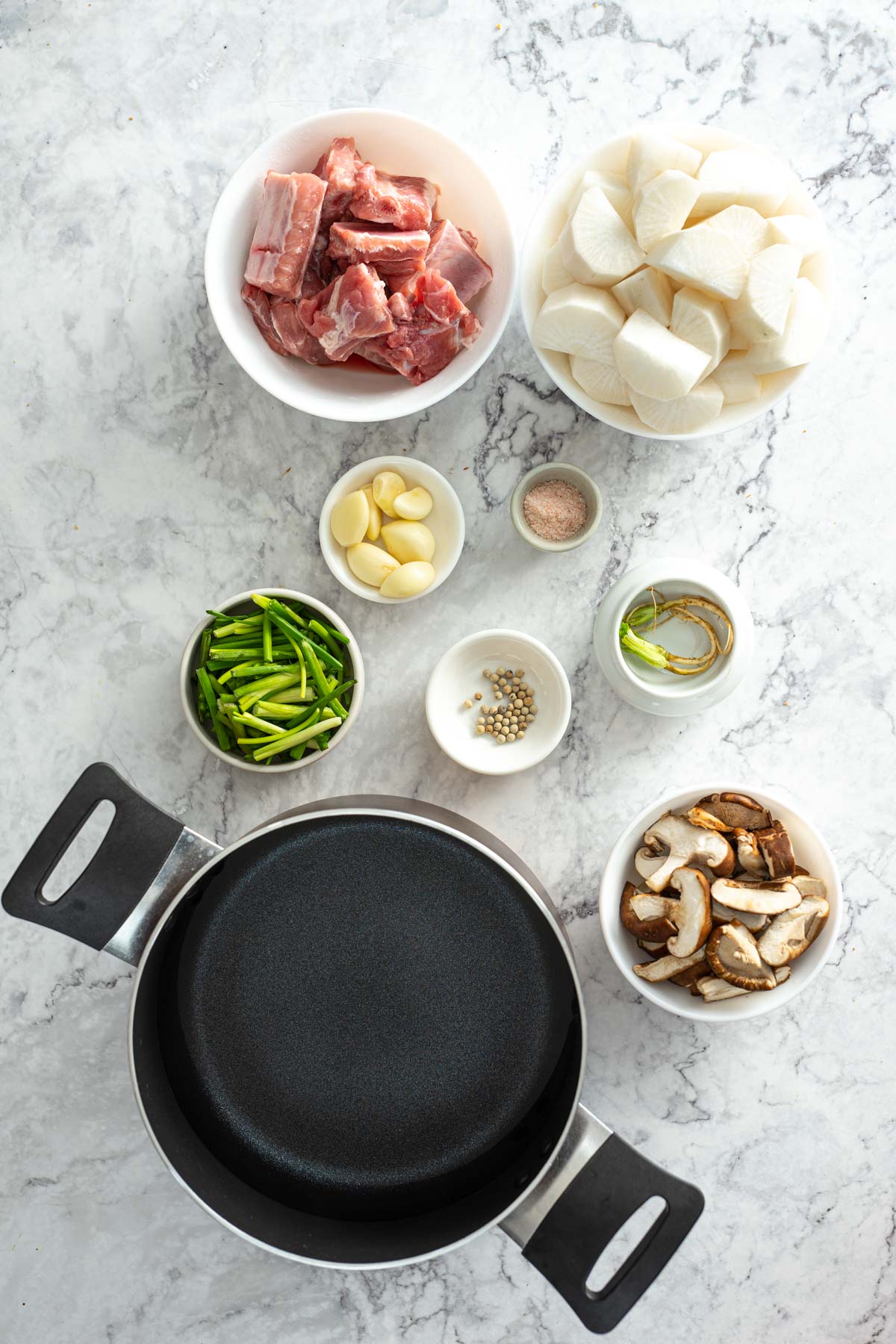
Here is a visual overview of the ingredients in the recipe. Scroll down to the recipe at the bottom for quantities.
Ingredient Notes
Cilantro Roots: Cilantro roots (together with garlic and white peppercorns) are a crucial ingredient in almost every Thai soup base. If you want to make this Radish soup Thai style, make sure you don't omit this ingredient.
Daikon: For those unfamiliar with daikon or what we call หัวไชเท้า (hua chai tao) in Thai, it's a kind of radish. It's peppery, needs to be peeled, and can be eaten both raw and cooked. When raw, it's pretty crunchy. When cooked, it's usually cooked until very tender. You can cut the daikon in whatever shape you want, but it should be in bite-sized pieces.
Pork Ribs: You can use other types of meat you like. In fact, this soup is also great with my marinated ground pork!
Shiitake Mushrooms: These are optional but they go well with daikon in Asian soups and help help add more texture to the dish.
Instructions
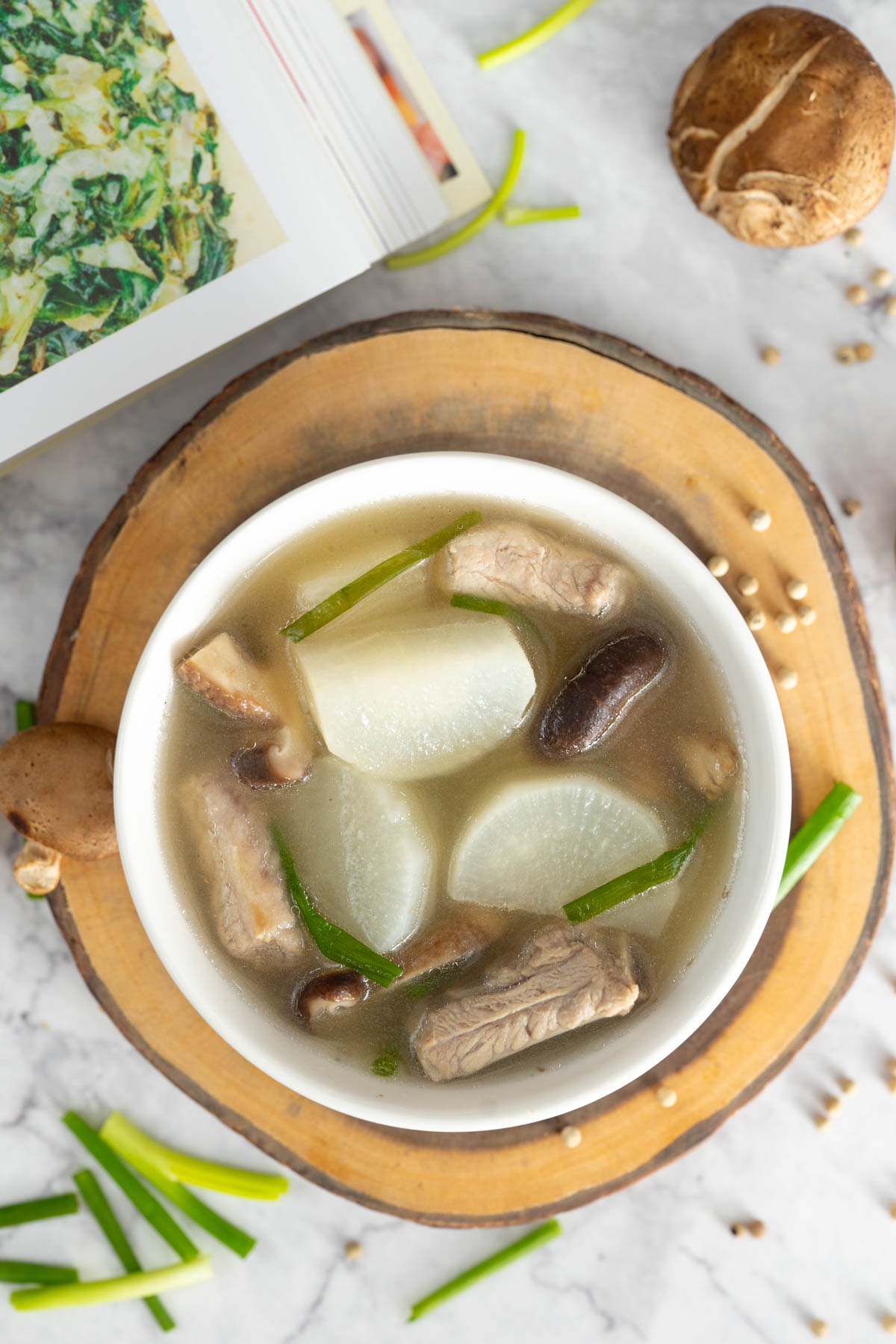
Step 1: Pound the cilantro roots, garlic, and white peppercorns in a mortar until fine.
Step 2: Add water, the aromatic mixture, daikon and pork ribs to the pot and simmer for 20 minutes.
Step 3: Bring the soup to a boil and add the shiitake mushrooms.
Step 4: Season with salt and turn off the heat.
Step 5: Add the spring onions and close the lid for 1 minute before serving.
Tips
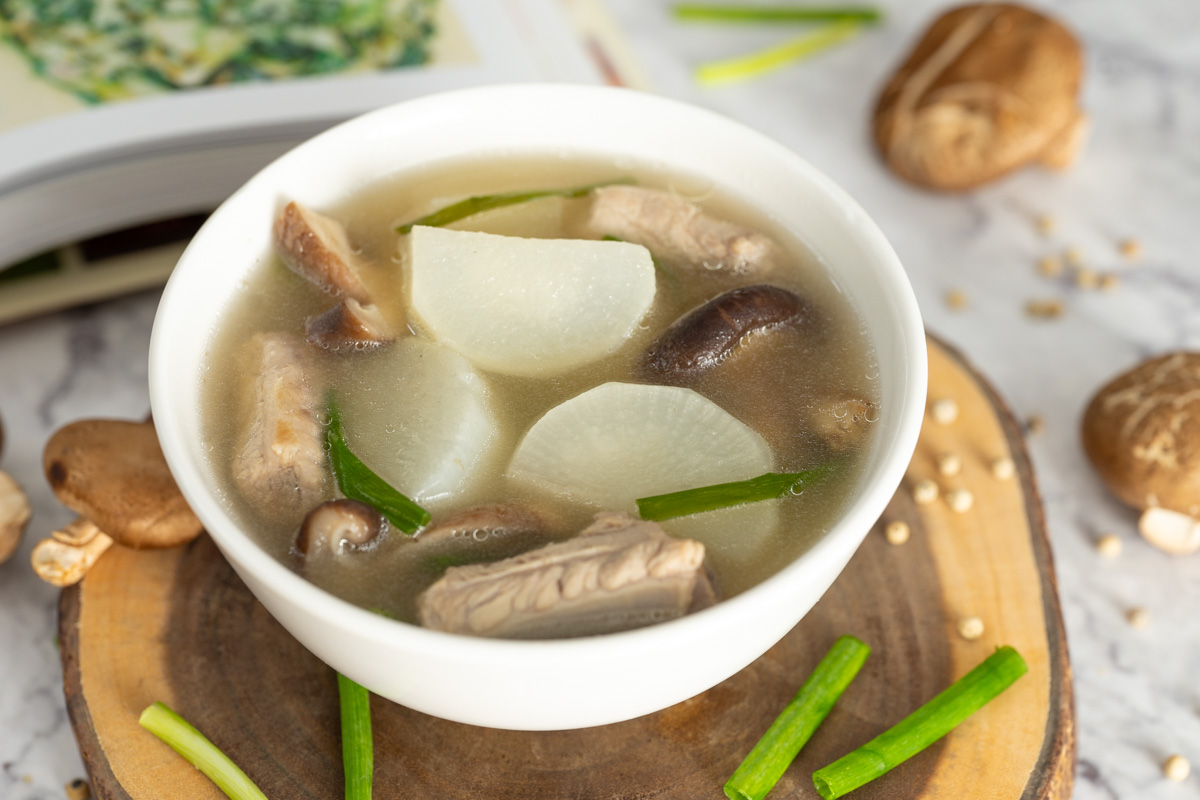
1. Adding daikon together with the pork ribs to the pot from the very beginning helps bring out the sweetness in them and allow then to become tender.
2. It takes a bit of simmering for the daikon to be perfectly tender. But when cooked, the daikon will become transparent. You can test the texture by poking it with a chopstick.
3. Use a spoon to remove the excess fat from the soup as it simmers.
4. Add the spring onions once you've turned off the heat so that it's still freshly green when served.
Storage and Reheating
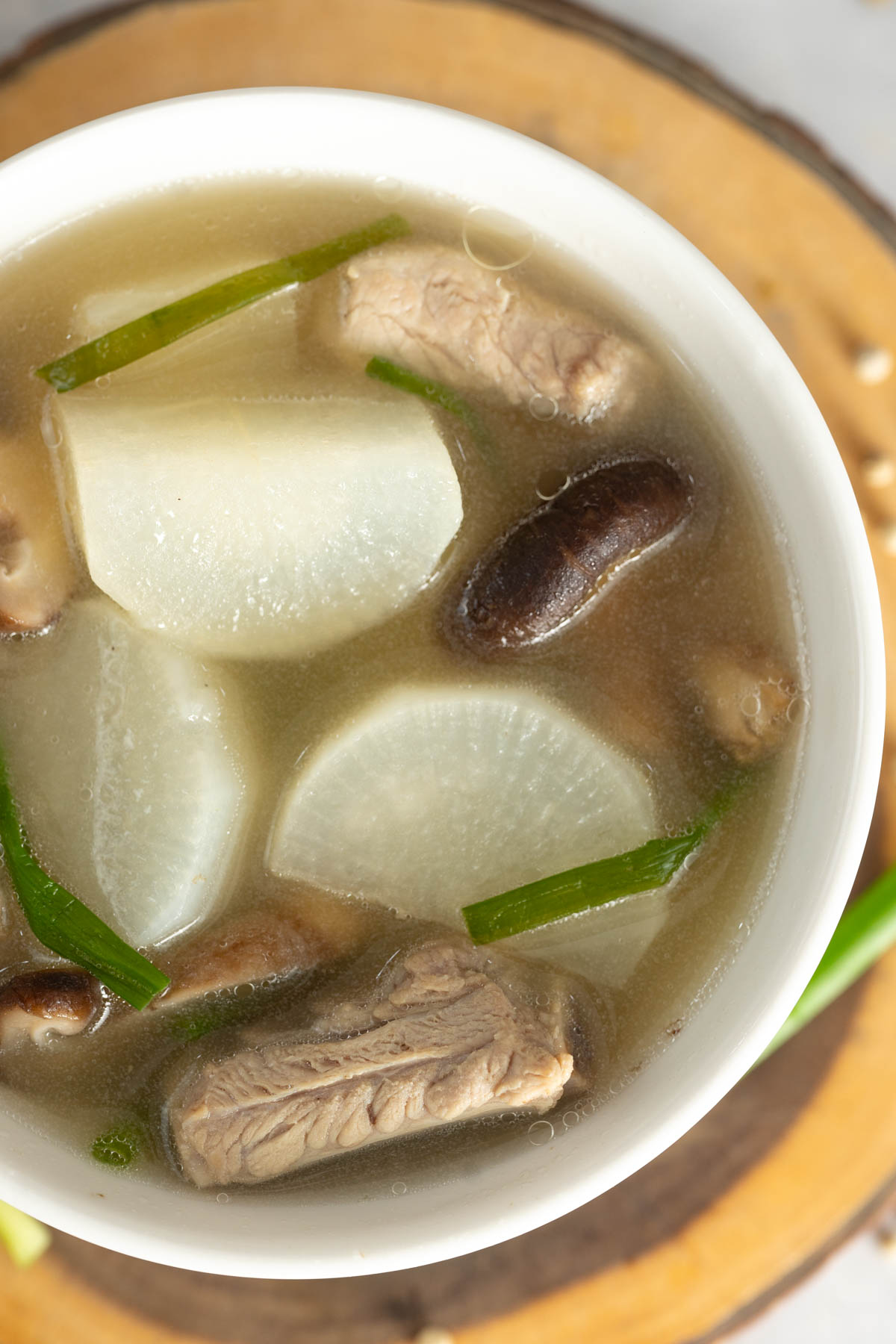
This soup can be stored in the refrigerator for 1-2 days. You can reheat it over the stove or simply microwave it for about 3 minutes.
Related Recipes
📖 Recipe
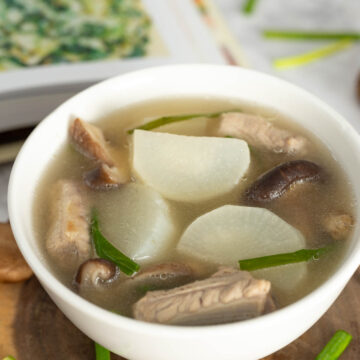
Daikon Soup with Pork Ribs (Thai Style) | ต้มจืดหัวไชเท้า
Equipment
Ingredients
- 3 cilantro roots
- 7 cloves garlic peeled
- ½ teaspoon white peppercorns
- 5 cups water
- 1 head daikon about 18 ounces or 500 grams
- 12.2 ounces pork ribs
- 2 ounces shiitake mushrooms sliced
- 1 steaspoon salt
- 5 spring onions cut, about 1 inch long
Instructions
- Pound the cilantro roots, garlic, and white peppercorns in a mortar until fine.
- Add water, the aromatic mixture, daikon and pork ribs to the pot and simmer for 20 minutes.
- Bring the soup to a boil and add the shiitake mushrooms.
- Season with salt and turn off the heat.
- Add the spring onions and close the lid for 1 minute before serving.
Notes
- Adding daikon together with the pork ribs to the pot from the very beginning helps bring out the sweetness in them and allow then to become tender.
- It takes a bit of simmering for the daikon to be perfectly tender. But when cooked, the daikon will become transparent. You can test the texture by poking it with a chopstick.
- Use a spoon to remove the excess fat from the soup as it simmers.
- Add the spring onions once you've turned off the heat so that it's still freshly green when served.